How to Learn a Language on Your Own (Part 2)

Welcome back to this short and sweet 2 Part series where I discuss how to learn foreign languages. I recommend reading Part 1 first, but as a quick summary, input and continuous exposure is key. Having already delved into how languages are acquired, I’m now going to turn that information into some practical advice on how to learn a language on your own! 

As always, these posts are based on my own experiences with language learning, particularly as someone whose goal is to achieve fluency. This guide just goes over the basics and is not meant to be comprehensive.

Step 1. Familiarisation

Familiarisation is a key step that people tend to overlook. Although we’re tempted to throw ourselves into learning “hello, how are you”, that information won’t be easily retained if we haven’t taken time to soak in the language first. 

At this stage, our goal isn’t to learn even a single word; we’re just getting our brains used to the melody, sound and look of the new language so that when we do start learning it, it won’t feel as foreign to us and will be easier to decipher later on.

Start by spending 10 minutes with the language every day. You can choose any material you like, whether it’s a movie, a podcast, a book, or something else. Appreciate the new sounds, what the words look like, or simply use it as background noise while doing other tasks.

If you think you’d recognise the language if you heard it out in the wild, you’re ready for the next step! 

Note: For languages with different writing systems (Japanese, Greek), I’d suggest learning the basics of that as soon as possible. I may go into more detail about how to do this in a future post, but some ideas would be flashcards and practice sheets. It’s mostly just a matter of memorisation and practice.

Step 2. Listening

Now we’re going to differentiate between two types of listening:

Passive listening: listening to something while doing something else, or reading something without worrying about understanding it. (This is what you were doing in the familiarisation phase.)

Active listening: being consciously immersed in what you’re listening to, and trying your best to understand it. 

Most of the time, you should focus on passive listening. But once or twice a week, sit down for an active listening session and see how much it boosts your comprehension and retention!

Of course, if you’re just starting out, you’re not going to understand anything. So how do you start understanding things as a complete beginner? Learn the most common words first. You can look up lists of them online, but a more natural way to do this is by studying the content you’re already listening to.

Pick a small piece of media, e.g. a chapter in a kid’s audiobook. After a few active listens, you should catch a recurring word or two. Translate those and give them a visual association in your head. Then, the next time you listen to it, pay close attention to see if those words pop up again. Every time you hear them, visualise their meaning.

By doing this, you’re not only learning new words but tuning your ear to these nuances in the language and training you to identify patterns in it. This will come in super handy when you start inventing your own sentences.

Just to be clear, it’s completely fine–essential even–to use a translator to learn new words and phrases as a beginner. The important part is how you retain them afterwards. 

Instead of associating a word with its translation, associate it with an image or gesture. This can be tricky with words like “the” and “is”. For those, just try to see them within the context of a full sentence rather than on their own.

From there, just keep listening and filling in gaps in your knowledge. Make it your goal to understand something simple, like a short story or even a short sentence, and take little steps towards that everyday. As you expand your knowledge, increase the difficulty of the content so it’s just above your skill level. This way, you’re guaranteed to keep making progress.

Step 3. Speaking

You shouldn’t worry about speaking too early on – at least not until you’ve built solid foundations in the language, and that comes by listening. That’s not to say speaking will suddenly click for you after you’ve spent X amount of hours listening to the language… but the more time you spend listening, the less time it’ll take to learn how to speak.

That being said, it’s important to develop good pronunciation habits early on. The key to doing that is exaggeration.

Every language uses different sounds, and thus different muscles in the face. To unlock these sounds, it may help to get a video of someone speaking and imitating the way their mouth is moving. If you feel your face getting tired, you’re on the right track!

When it comes to actually communicating, learning things by heart is a very powerful method. In the last post, I encouraged you to say the French word “pomme” every time you see a 🍎. Well, we can take this a step further and learn a full sentence. Every time you brush your teeth, say “Je me brosse les dents”. This helps you internalise the sentence structure, making it more intuitive to use.

Remember that at the core of all this is communication. Don’t just memorise a sentence and repeat it over and over; wholeheartedly try to convey a message while you speak. This forms connections between the words and their essence, so that when you find yourself in a context where that sentence fits, it’ll pop into your head automatically due to that emotional/visual association.

So what about inventing your own sentences?

Inventing sentences is different from learning how to listen and read, in that it involves more trial and error, ironing out your mistakes, and reinforcing corrections. But if you’ve already familiarised yourself with the language, you’ll have an ear for what sounds right and what doesn’t, which speeds up the process tremendously. 

Remember that you can’t force language acquisition to happen; it’s a subliminal process, and we can only encourage it through continuous exposure and practice.

Closing Thoughts

This series was a real exercise in keeping things concise, because there’s just SO much I could say on this topic. I will highly consider writing more language-related posts in the future where I can dive into the details I left out in this rough guide!

I hope this was useful to you and thank you so much for reading.

How to Learn a Language on Your Own (Part 2) Read More »

How to learn a language on your own (Part 1)

Welcome to Part 1 of a short and sweet 2 Part series where I discuss how to learn foreign languages. These are based on my own experiences with language learning and the advice from books, articles and videos that helped me.

This is intended for people like me whose goal is to learn languages to fluency. Meaning, to the point where producing the language is second nature to us and we can comfortably understand others.

If you just want to pocket a few phrases to get by in another country, or want to pass your Spanish classes at school (which are both fine motivations of course), the coming posts may not apply to you. But I’ll try to make it an interesting read nonetheless!

How do we learn languages?

Before we talk about anything else, we first have to understand how we actually acquire languages.

Kids (0-12) learn languages through input. Adults learn in pretty much the same way, with a few different hurdles because we’re more conscious during the process.

Input is the act of listening, reading, and otherwise absorbing a language. It’s the method I’m using to learn French, and one that so many non-native English speakers inadvertently used to learn English.

Reading grammatical explanations isn’t input. It’s study, a memorisation game — and while it can definitely help illuminate and strengthen our understanding of certain things, it alone isn’t the cause of fluency (complete comfort in a given language.)

Language is naturally, not forcefully, acquired through continuous exposure to it. Which means listening… listening a LOT.

80% Listening

Our minds have an amazing knack for pattern recognition. Let’s say you listened to one episode of a podcast 100 times in a given language. After as early as the 10th listen, you would begin to pick up on the most frequent words, the intonations of the speakers, and the sentence structure. Eventually, you would learn the entire transcript like lyrics to a song, even if you didn’t speak a word of the language beforehand.

Of course, we won’t learn a language JUST by listening blindly… on top of listening, we have to connect the words with meanings by either translating them into our native language, or, even better, giving them visual associations.

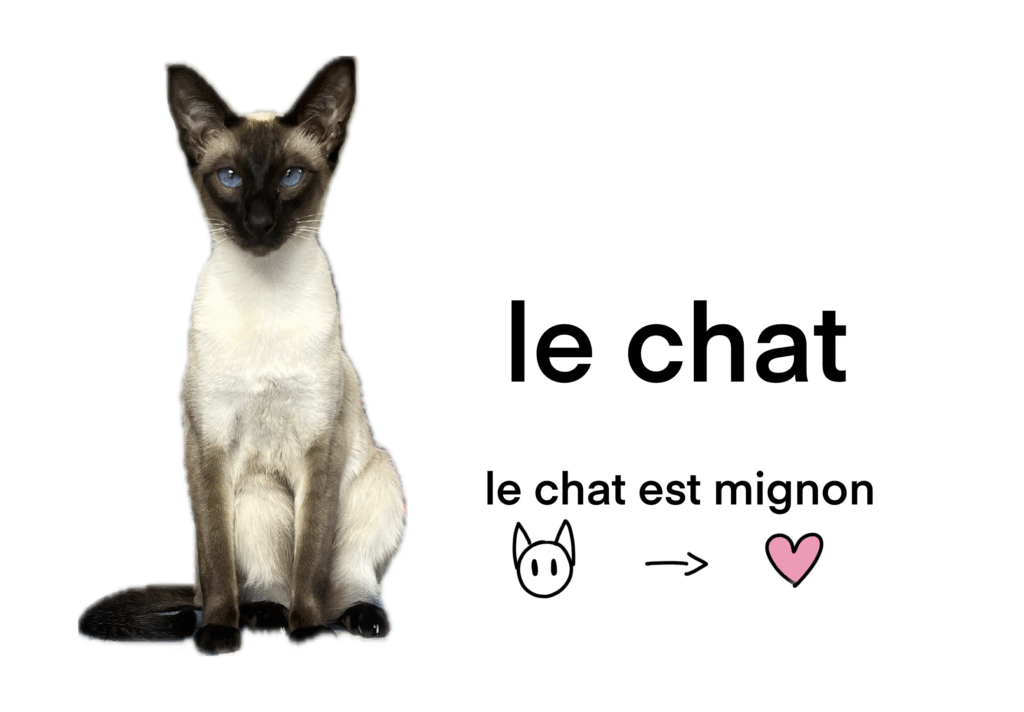
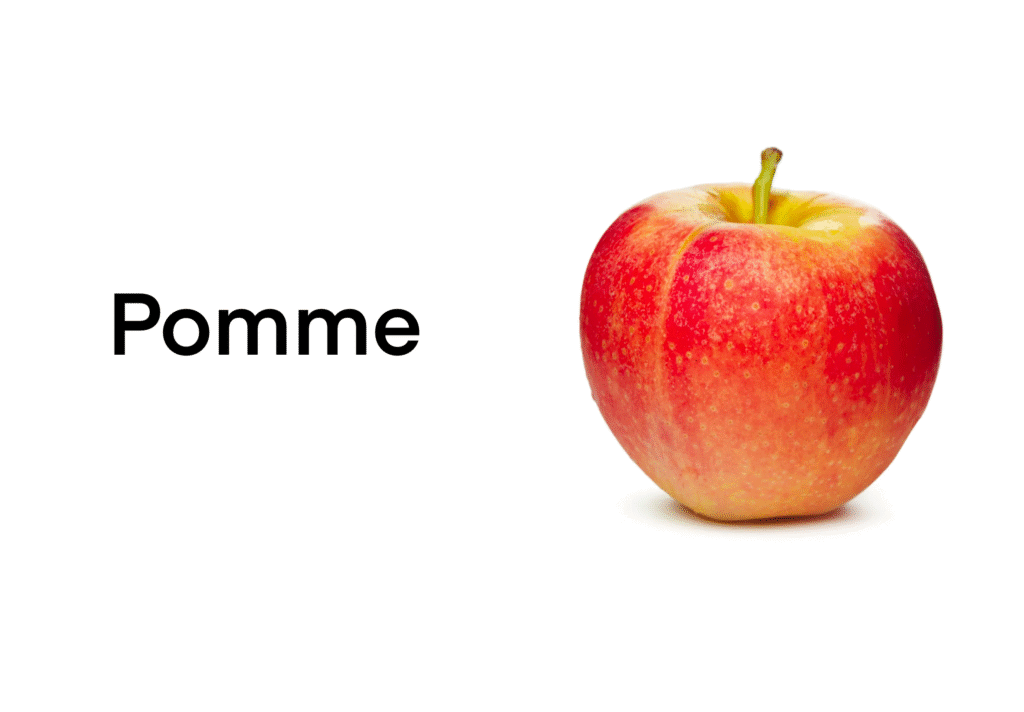
This is a French word next to an image. After looking at this, what do you think the French word for “apple” is?

Now, imagine this was a video and every time a native speaker said “pomme”, this image popped up. You would learn the meaning, the spelling, and the pronunciation of the word “apple” in French, and you would have never even needed to translate it into your native language.

The final step is learning to speak.

20% Speaking

Luckily, speaking the language will come to you a lot faster if you’ve already spent hours listening to it. All it takes now is practice!

It’s probably not a rare occurrence for you to see a 🍎. So every time you see a 🍎, say “pomme” out loud.

Soon enough, that word will automatically pop into your mind whenever there’s an appropriate time to use it. Just like words and phrases pop into your mind in your native language!

Note: This isn’t the full picture and challenges vary from language to language (and person to person). But I hope this gives you an idea of how language acquisition happens/starts to happen.

In part 2…

…I will give some more practical advice on how to learn a language based on what I’ve talked about in this post.

How to learn a language on your own (Part 1) Read More »

How to introduce cats & all about our new kitten

Do you remember in my All about Astro post I recommended getting two Siamese cats instead of one?

Guess what!

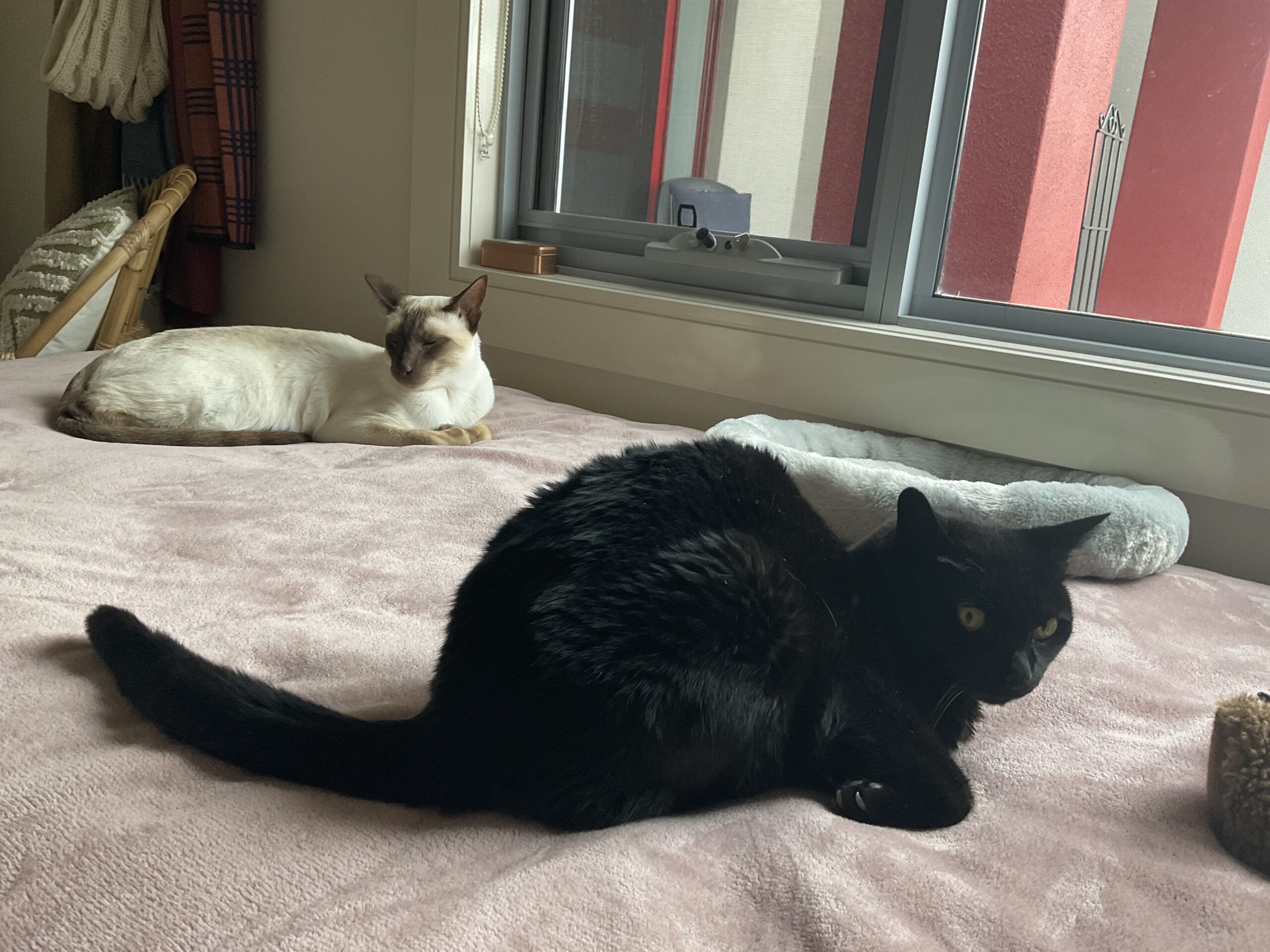
Meet Cosmo, our four-month-old kitten! We got him for various reasons, but the biggest one was to give Astro a brother, and despite our fears from the beginning, today they are inseparable! In this post I’m going to cover the history of getting this adorable boy, how we successfully introduced him to Astro, and all about his personality. Strap in because this is going to be a long one.

How we got Cosmo

We had always talked about getting a new friend for Astro, but we were never convinced until January this year when we saw a posting for a litter of Siamese kittens. I wasn’t instantly sure, though. I thought the kittens were adorable like everyone else would, but it felt like just another opportunity that we probably wouldn’t take. It was only after running through the reasons that we realised the cirumstances and the timing were too perfect to ignore.

Now, when I tell you we would be going on a trip to New Zealand the following month, you might think that’s the opposite of perfect timing. But the boy we had our eye on wasn’t ready to leave his mom yet, so that 14 days or so away was the perfect amount of time for us and the kitten! Plus, the trip was exciting enough that it made the wait much less excruciating.

We were already going through lots of name ideas. It wasn’t like Astro, where his name suddenly came to us and immediately clicked. We had quite a few on our list that we were going back and forth on, but we ended up going with COSMO! And I can say it definitely suits him – the only problem is that Astro and Cosmo’s names might be too similar and go too well together that we often mix them up…

Many plane flights, mountains, kiwis, gondolas and luges later, we made it back home – and the next day we would pick up our kitten!

The unfortunate thing is that we got very sick by the end of the trip – headaches, severe fever, extreme fatigue. So after we brought him home, the first few days was just us crowded in one room with blankets and cat toys. When you’re sick, everything feels pretty hopeless, so I was put off from almost everything and wasn’t able to fully appreciate Cosmo’s cuteness.

Luckily, Cosmo is growing slowly and is still a tiny little kitten, so now that we’re well over our sickness, we’ve got a second chance to appreciate it. Astro, on the other hand, seemed to spend one week as a kitten and then blew up into his mature self.

How we introduced our cats

Cosmo was extremely shy at the beginning. Hiding in his igloo all day, running under the bed at the smallest sound, sometimes hissing at us. However, we realised quickly just how playful he was, so all we had to do was wag a toy around and we started building up his confidence. Now he’s so confident that he’s comfortable jumping on a cat who, to him, is about the same size a full grown lion would be to a lion cub.

Spoiler: Astro and Cosmo are best friends now, and were since the first time they laid eyes on each other.

We’re not really sure whether they were just destined for each other, or if it was thanks to the methods we used that they got so comfortable with each other so fast. Either way, I’m going to go over the steps we did to introduce them, just in case it would help somebody wanting to introduce two cats.

1. Give the new kitten/cat one room to start off with

In general, this is a good idea. Your kitten will likely be scared of the new place and a large area will overwhelm them even more. Introduction-wise, this is also important so the older cat doesn’t feel like their whole territory is being invaded right away.

2. No eye contact

One thing to know about cats is that they are all about scents. Do not let them see each other. Just allow the cats to sniff each other under the door. You’ll know they’re ready for the next step if they are comfortable going close to each other’s doors. For us, Astro and Cosmo were even sticking their paws under and playfully batting each other.

Astro looking at Cosmo’s paw under the door.

3. Create positive associations

This can be done even if there’s still a door between them. Whenever the cats see or smell each other, give them treats and affection so that they associate each other with positive things.

4. Gradual visual contact

Once you think they’re used to each other’s scents, it may be time to open the door, but only a crack – maybe to the point that they can’t even really see each other. This is just to test how they react when they realise they may finally meet with the cat behind the door.

Watch your cats’ body language: when you open the door, are they excited, scared, threatened, calm, playful, curious? Are they puffing up, hissing? This will tell you how much to open it, and for how long, and whether they really are ready for this step. The first time we cracked the door open, Astro and Cosmo were looking at each other like, “What’s the big deal? I already know this guy. Why are you hiding him from me?” So we were comfortable opening the door even more to the point they could get right up close.

WARNING: While we did this, we had two people on either side of the door holding both cats back. If this isn’t an option for you, just make sure the cats cannot touch or swat each other. It’s normal for them to hiss, but if they start fighting or getting angry, take them away and try again later when they’ve calmed down.

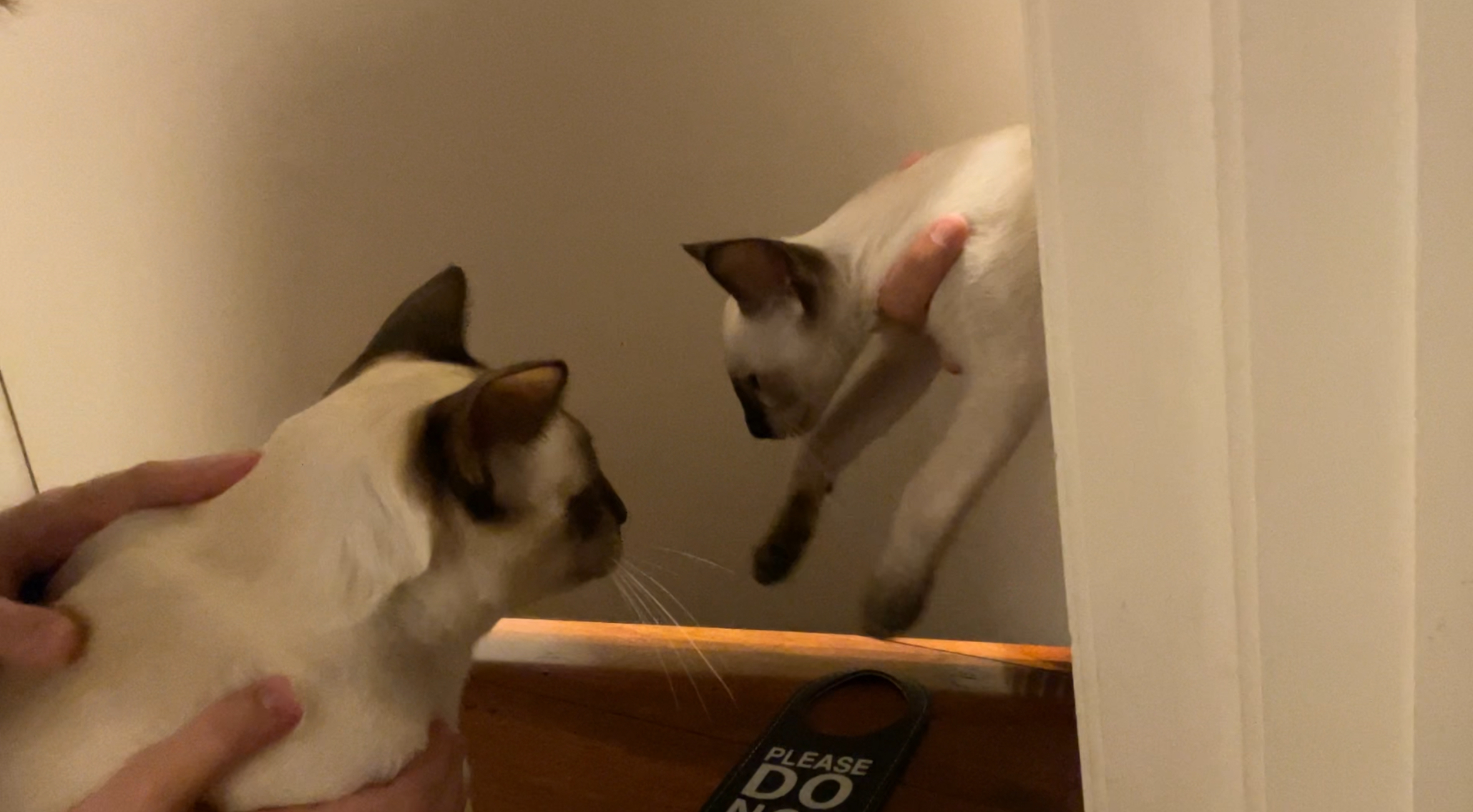
A real image of their first face-to-face!

4. Free roaming (with supervision)

After testing their reactions with the last step, you should know when your cats are ready to “free roam” with each other (as always, every interaction must be supervised).

What we did when our cats were ready was open the door to the kitten’s room. Being there for only a few days, the kitten didn’t strictly consider it his territory, and the older cat was ok going in there since it is part of his house. We weren’t ready to give Cosmo the whole house yet, so we let Astro explore his room, sniffing everything he’s scented.

Astro and Cosmo free-roam together for the first time.

It’s normal for things to be a bit different from when they were looking at each other through the door. For us, Astro was relatively relaxed when we first let him into Cosmo’s room, while Cosmo was actually a little overexcited. Once he got too close, Astro hissed. That is the one and only time he has ever done that to Cosmo, and understandably so. The rest of the interaction proceeded as normal. No fights, no swatting, no puffing. Just the cats setting their boundaries and sussing each other out.

But it may take multiple sessions for them to get used to each other’s presence.

5. Let the new cat explore the whole house, go back steps if you need to, and hopefully…

Happy as can be!

All about Cosmo

Astro came from a household where other Siamese cats like him were piled up to the roof. It was like heaven for such a social cat breed, so you can imagine his disappointment when he came to a home with no other Siamese. The only other cat he knew was Ruby, an amazing Burmese-Bombay lady who almost lived up to 20 years old! Unfortunately, such an old cat wasn’t a great match for an energetic Siamese kitten.

Astro doing his best to get close to Ruby.

He spent around two years with her before she passed away and was left with no one else… but another year and a half later, he saw his own kind for the first time since he was a kitten – his new brother Cosmo!

Born in December 2024, Cosmo is a four-month old kitten. Unlike his brother who is half seal-point, half chocolate point, Cosmo is fully seal-point and is thus already on his way to surpassing Astro’s darkness.

The first time we held Cosmo, I cannot stress just how small he was. He was literally a mouse, being tiny, timid, with these giant eyes and ears. However, he has definitely grown since we first got him, and is already catching up to Astro in size, colour and especially confidence! In fact, sometimes I mistake one for the other at a glance.

Cosmo is a very smart boy. While Astro did occasionally play fetch when he was a kitten (and rarely does today), Cosmo will consistently fetch his ball any time you throw it! He makes a few different sounds to Astro – the most famous one is the growl. He used to make this sound when you got too close to his ball, but now he makes it anytime during crazy hour.

Cosmo hugging his favourite ball.

A cute downside is that Cosmo is… pretty destructive. He’s slowly getting over it but he will take the opportunity to tear up tissues, bite the sides of my iPad cover, pull on my pants strings, etc.

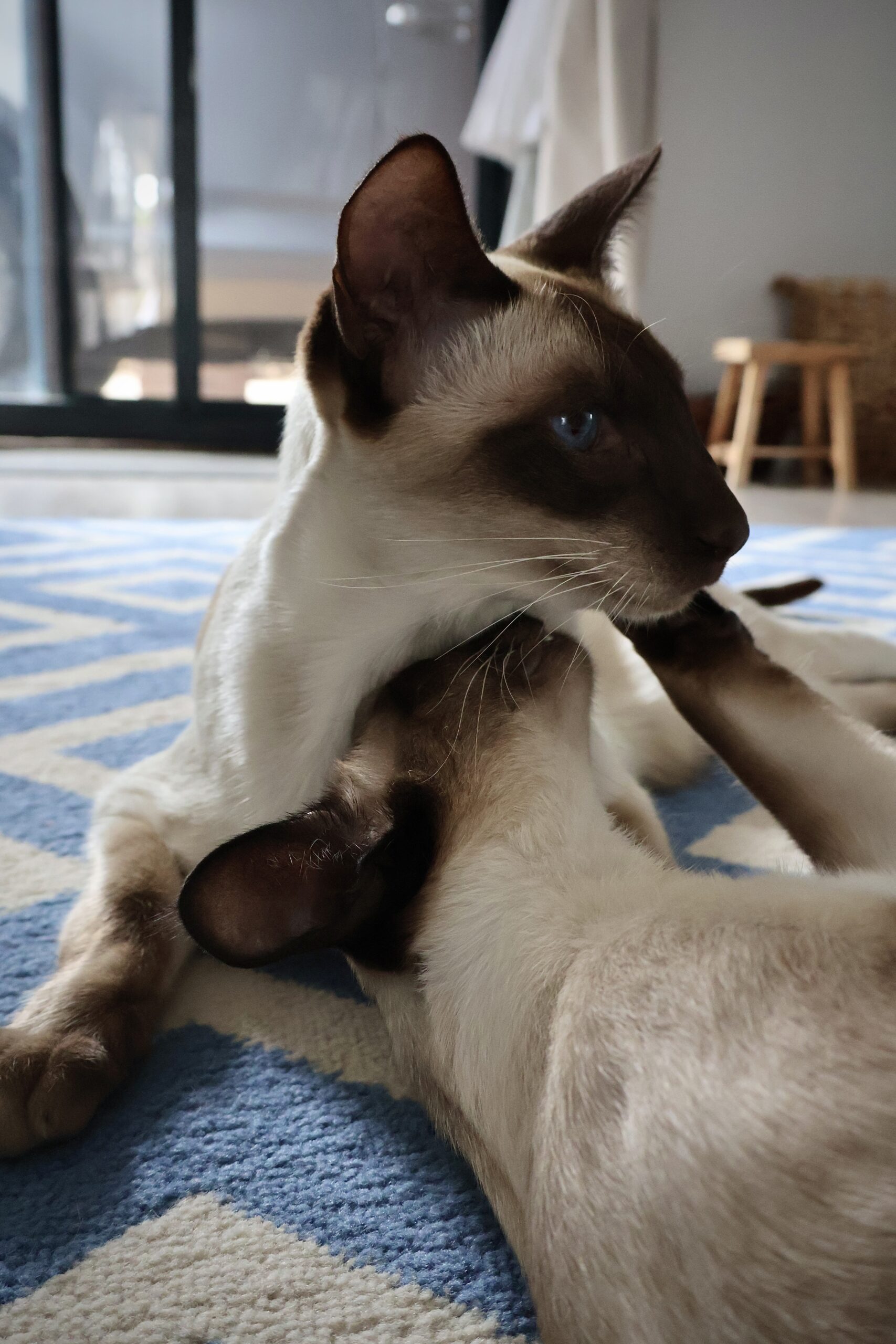
He’s not afraid to literally jump onto Astro and start a wrestle fight either, biting each others’ necks, chasing each other. This doesn’t happen much anymore but it can be shocking when you’re not used to it. Just know that if no one walks away with any wounds, they’re likely being more gentle than they seem. It’s just how cats play. You should still trust your instinct though and you definitely don’t have to encourage this behaviour!

The good news is that they snuggle a lot more than they fight. Astro is still a playful, loving boy, and I think it’s safe to say that Cosmo has improved his life in almost every aspect. And I’m glad we were able to give Cosmo a home with another Siamese right from the beginning!

That’s about it from me. I hope you were able to learn something from this post or were at least entertained by the adorable Astro, Cosmo, and a special appearance from Ruby. See you in the next one!

How to introduce cats & all about our new kitten Read More »

My problem with exposure and why I find it hard to post

I have tried at multiple stages in my life to grow a platform online, but have never been able to follow through.

I find it hard to share what I make, whether it be on a YouTube channel or on my very own website. Usually I start off with a little spark of motivation that helps me carry out the first step, but nothing more after that. I enjoy the feeling of being productive, like having a project to chip at in the background, and making it the best it can be. But I hate coming up to the part where it’s time to share it – and so I never really do.

In this post, I’m going to be as honest as I can about why I have been neglecting this site and all my other platforms. I also intend for this to be this website’s key post that contains my goals and intentions for being here.

Why I find it hard to post

Posting anything is usually a big deal for me.

A few days ago, I uploaded a video to my YouTube channel (not the first: there are many other ones hiding under the “privated” option). It was a little animation I made that I hadn’t intended to show to anyone when I first started working on it. As long as I liked it, I was happy, and no one was going to see it anyway, right?

Halfway through the process, I got that spark of motivation to start up my YouTube channel again. Suddenly, I thought that my animation would be the perfect first video to post.

After that, I started obsessing over every little detail a lot more. Now that I’d introduced the idea of showing it to other people, I didn’t like it as much, because the way I saw it, it was no longer “mine.” I wasn’t making it for me anymore, I was making it for my (nonexistent) audience.

Finally, I got to the stage where I was happy with the animation, or more so tired of working on it. I remember saying to myself: “OK, once the colours are finished, there is no way I’m adding shading and a background. That would take way too long.” …you can guess what I added after that?

But then I realised something: at the end of the day, no matter how perfect it looked, it was always going to be just 2 seconds long. So when I came around to editing it, I went for a more humble iMovie style, as I didn’t want to over-hype such a short animation.

My first attempt at posting the video was on a channel that no one even knew I had. I was still nervous. I wasn’t confident in the animation at all and even found it kind of stupid. I was, in effect, purposefully hiding the video from everyone. So what happened was only logical. The video got 0 views from anyone but me. I took it down a day later. But not for that reason.

I couldn’t ignore the feeling that I was already trying to be someone I wasn’t. I’m NOT a minimalist editor. I enjoy the editing process a lot, and ever since I learned how, I’ve always dreamed about going a bit over the top with my videos.

Then I understood that even if a 2 seconds long animation doesn’t “deserve” to be hyped up with high quality edits and a built-in behind-the-scenes look, that’s at least more what I would do. Keep in mind that all I mean by “high quality edits” is that I used Filmora Wondershare instead of iMovie. But that’s probably just me again trying to downplay my work.

The most important change this time around, though, was that I decided to post the video on my main channel, which at least one person knew about.

This was all a step in the right direction. Now that I’d made something I somewhat liked, it didn’t matter to me as much the amount of views it got. So I uploaded it. And guess what? The views part was no different, except for one thing: it had a like and a comment from my brother. For me, who shares about 2% of the stuff I actually make, that was an accomplishment.

So to answer the question, Why do I find it hard to post? The main thing is that I don’t like my work, at least when I make it with other people in mind. But I know that I’m going to have to work on this if I ever want to get something more out of my projects. And that brings me to the question, What do I want out of this?

Why I post

I made this website a few months ago in 2024. It was originally titled Adventure Savy, and apart from the fact that having a personal website is just cool, I made it because I wanted to share bits of my life and document my progress in achieving the goals I had at the time.

Today, things are a slightly different. Instead of exclusively sharing my thoughts, I want to share bits of my projects. It’s less a website for me, and more a website for my work, which is anything from drawing to animating to writing, to anything else I discover along the way.

I’m still asking myself what I really want out of this, if anything. I mainly just post and if people find it, they find it, and if they don’t, they don’t. I don’t put any effort into that actually happening, because I’m scared of that happening.

I’ve always done the bare minimum when it comes to growing a platform online. I post the thing, and I leave. I don’t want to show it to anyone. I don’t want to promote it. I don’t want to bring attention to – or even put that much effort into – something I’m not sure others will like. Otherwise that would mean some kind of commitment, and I’m not a fan of commitments. I prefer for exposure to happen “organically”.

I was going to say that on certain websites, blowing up out of nowhere can happen, and that it has happened to me, but now I’m thinking that actually isn’t true.

I used to have an animation channel, around 2017-2018 when they were getting very popular (I didn’t do it for that reason; I just loved animating). My channel was very steadily on its way upward, and I was confident enough in what I was doing to actually engage with my audience, plan collabs, and further hone my skills. Unfortunately this might have worked a little too well, for my numbers at least. I’d had my channel for about a month at that point, and during that time I had been exposed to a whole new side of the community.

I wasn’t really able to stand my ground back then, so I decided to take a different direction with my channel which wasn’t originally what I had planned, in order to keep up with everyone else’s expectations. 

Eventually I realised it wasn’t the most positive place for me to be in, and I was scared that my success would trap me there. So, I ended up deleting my entire channel.

Like I feared, YouTube can become a commitment at a certain point, but to survive that, you have to enjoy what you do. And if you do enjoy what you do, what reason would you have to quit other than being overwhelmed and out of your comfort zone?

I’m not often proud of what I make, in the sense that I would go around and show it to everyone and not care what they say because I think it’s nice and that’s all that matters – like showing photos of my cat. I usually feel another kind of proud, like I love that one novel I wrote or the fan art I made for it on Procreate, but does that mean I would ever show it to anyone even if my life depended on it? No way. But that prompts the idea that… maybe I should anyway.

Final thoughts

There’s a decision I’m hiding from. Once I figure out my why – why I want people to read what I write, and watch what I make – then I could either take the quiet route, where I continue posting like this and let it reach people organically (which almost definitely won’t happen, at least for a very very long time), or I could get my work out there in the way I know I could if I really wanted to… and I don’t know if I do yet.

I hope I’ll be able to update you soon, but know that if I do decide to do something more with this website, I have a lot of exciting things planned!

My problem with exposure and why I find it hard to post Read More »

All about Astro

Hello! I’ve been wanting to share some of his infinite cuteness with this website, so this post is going to be all about my cat Astro, AKA Big Boy, and about the Siamese breed in general.

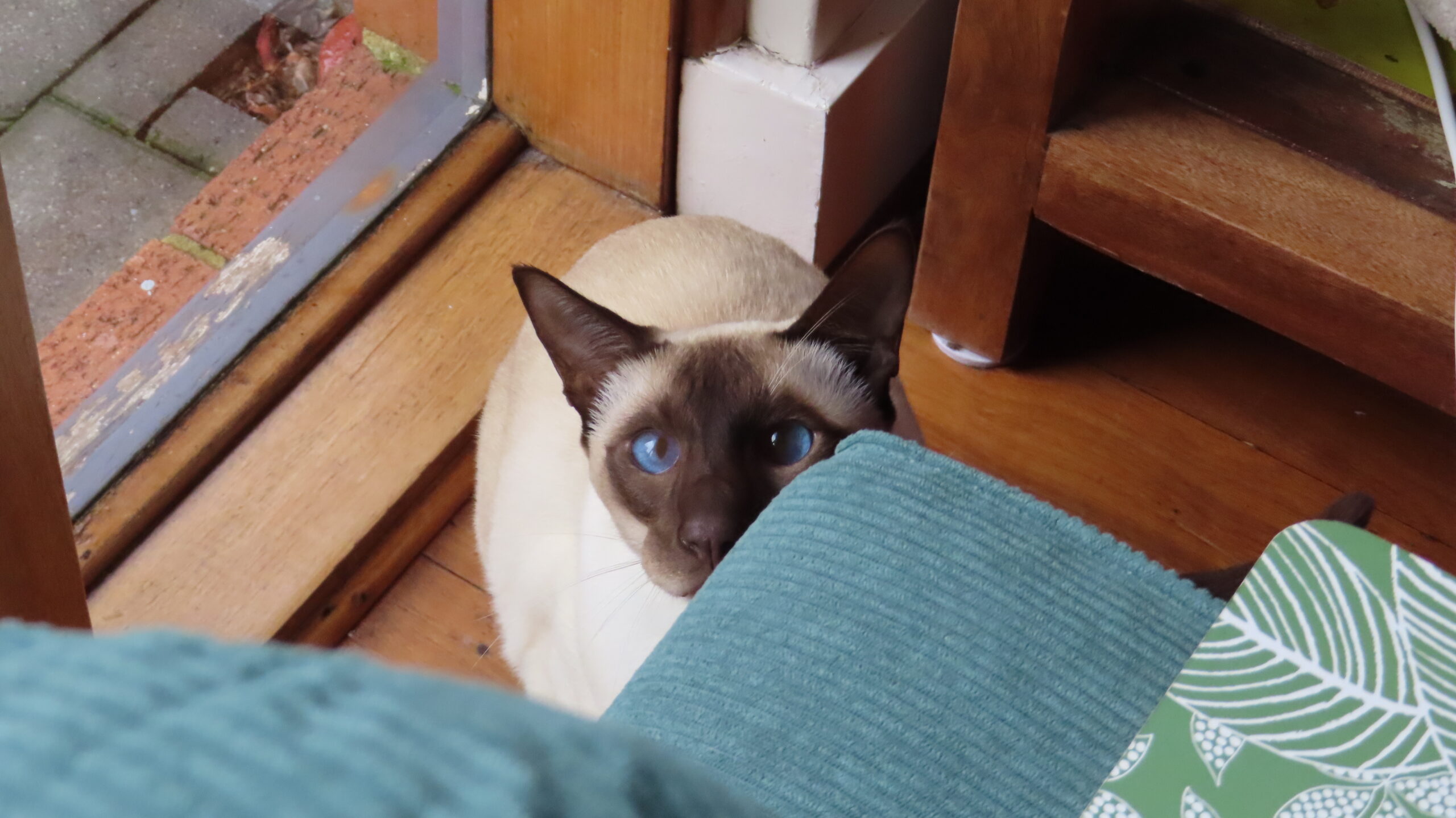
As an introduction: Astro is Siamese, half seal-point, half chocolate point. He’s more oriental-looking than the applehead Siamese, but I heard he was bred to be more bulky, so he doesn’t have the health problems oriental shorthair cats can sometimes get. We got him in December 2021 but he was born that year on the 29th of September, which means he’s currently two years old.

He’s an extremely active boy and his favourite thing to play with is his “chicken”, which is literally just a rubber chicken tied to the cord which fell out from the pants I used to wear. He loves to chase and jump after it… he also likes to chew it so every once in a while we need to replace the chicken with a fresh one like we did yesterday.

Astro is always on high-alert. Though he’s cuddly, he’s often in the mood to play, meaning if I make one tiny move towards him he’ll bolt away. He loves scaring himself. Once I chase him into another room, he finds a hiding spot that I sometimes can’t find and other times can, but I always pretend not to notice him. As soon as he hears me walking out of the room, he comes out of his hiding spot, hits the back of my foot with his paws and then runs out in front of me, like he’s teasing me for not finding him!

Siamese are very smart, one of the smartest cat breeds of all time. Even within the very first days of having him, when he was a little kitten, he’d already learnt how to play fetch with his rubber chicken.

He likes plotting ways to get onto high places, namely the roof. It’s his first task whenever we move house. He can get down by himself but he prefers crying at us to help him down because he knows we’ll eventually get sick of it and force him down by shaking a treats packet. Though, in previous houses, we used to lift up random items like chairs and blocks for him to jump on and be lowered onto the ground. But he’d get treats after that as well.

In the morning at around 8-9 a.m. he meows for me at my door. Once I let him in, he gets really fluffy, not in the intimidating way, and walks around in circles, kind of shrinking into himself like a slinky or caterpillar. During this time he rubs his head on my legs, sometimes licks me, and jumps up on my shoulder while I get everything ready for the day, it’s just the cutest thing ever. Once, I carried him to the lounge room to play, but I had to get a drink of water first. I put him down and started walking to my room to get my water bottle and he ran after me, and tried multiple times to jump at my face like he was saying, “Where are you going? COME BACK NOW!!!” That’s another thing he does: watch out when he locks eyes with you, because this means he’s about to jump at you, which is more terrifying than you can imagine. I’m pretty sure he loves scaring us and hearing our reactions. He hates you looking at him from high places like this:

Overall, I LOVE Siamese cats. As long as you have enough time on your hands, they’re an incredible breed, best temperament, and of course stunning appearance. They need at least twenty minutes of play every day but they reward you with a lot of snuggling and being cute in every situation. They do need to be trained to go to sleep at night and not wake you up early, but this means you need to wear them out during the day. Having a favourite toy helps a lot. I do wish we had got him another Siamese to play with while we still lived near his breeder, so if you’re thinking of getting one, get two! Once you have one cat, it’s barely any different to have another.

That concludes this post! See you soon!

All about Astro Read More »

My first blog post

Hello! This blog post is the last thing I need to do before publishing this website! I’m really happy with the way it looks even though I know it’ll probably change in the future. It’s only taken me only around 10 days to complete, but of course I had already planned out the design beforehand so I knew exactly what I had to do.

See you on the live site!

My first blog post Read More »